


Amur GCC will be launched in synch with the gradual ramp-up of Gazprom's Amur Gas Processing Plant to its full capacity, so that the latter could supply ethane and LPG to Amur GCC for processing into high value-added products. The completion of construction and commissioning is scheduled for 2024–2025. Once in operation, Amur GCC will give a major boost to the growth of non-commodity exports, as Amur GCC’s polymer production capacity is 1.35 times higher than total polymer exports in 2019.
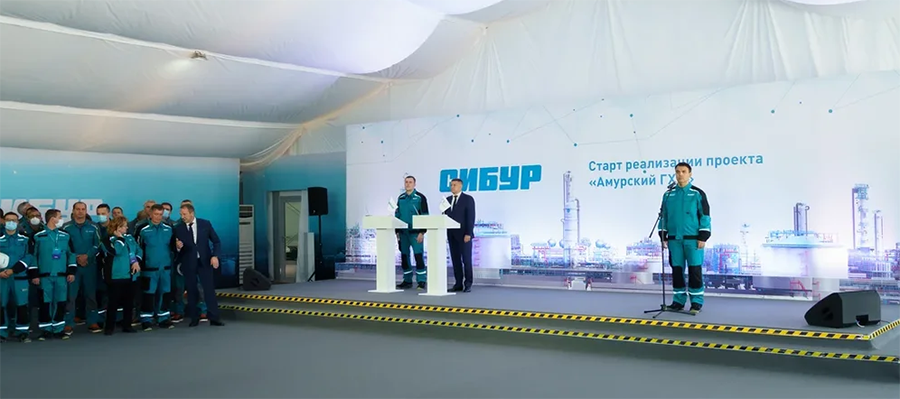
China's Sinopec is expected to become SIBUR’s partner under this project. As a national leader of the oil and gas processing industry, Sinopec boasts an extensive distribution network in China for oil and gas products of varying processing levels. This country remains the key driver behind global polymer consumption growth and is a target market for Amur GCC.
Most on-site preparations at AMUR GCC have been accomplished. Contracts for detail design and equipment and materials supplies for the facility’s key process units have been signed and are being fulfilled. SIBUR’s technology partners are Linde and NIPIgaspererabotka, Univation Technologies and Chevron Phillips and LyondellBasell.
NIPIgaspererabotka will be responsible for project management, procurement and construction of off-site facilities. Where unique foreign licensed equipment is not required, the project will source up to 80% of supplies locally – the highest reliance on local procurement among major gas chemical projects in Russia. Moreover, supplies such as metal structures, construction materials, laboratory and remote control equipment are all intended to come exclusively from local manufacturers.

“This is one of the largest investment projects in Russia that brings strategic benefits to the gas industry and the country at large. In a very short span of time, Russia's Amur Region will see the opening of a giant factory with most advanced production techniques based on modern IT and telecommunications technologies... Building a gas chemical complex will unleash new opportunities for the region and coupled with the opening of a gas processing plant will surely create a multiplier effect for the economy,” said Mikhail Mishustin.
“As a highly resource-intensive project this facility will increase the number of jobs at both construction and post-commissioning stages. With a new gas chemical cluster in place, students and graduates will have a wider choice of careers to pursue. This will help us curb talent outflow and offer the youth new digital professions and opportunities for well-paid interesting jobs in the Russian Far East,” said Vasily Orlov.
“Amur GCC is another step forward towards transforming SIBUR into a global-level petrochemical company. The complex will be a key project in SIBUR’s investment programme for the next 5 years and upon commissioning will almost double our basic polymer production capacities, even taking into account ZapSibNeftekhim that is currently ramping up to the full-scale output level. Long-term forecasts for petrochemicals demand, proximity to the sales markets and a well thought out feedstock base give us confidence that Amur GCC will be a highly effective and competitive business,” said Dmitry Konov.
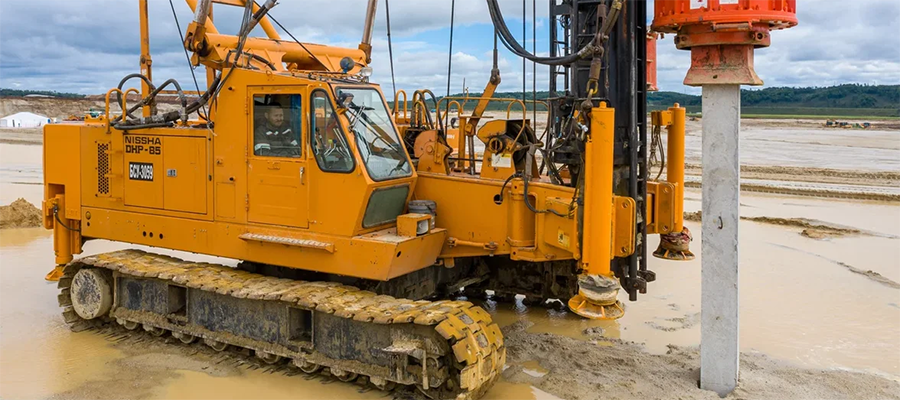
In addition to Amur GCC, the nation's largest gas processing and gas-chemical cluster will be created in the Russian Far East to boost the region's development. What makes the project even more important is the fact it is a stepping stone to unlocking the country’s huge non-commodity export potential. Deep conversion of ethane, a key feedstock for Amur GCC, quadruples the added value of the resulting product.
By 2040, this project is expected to increase non-commodity exports by RUB 4.6 tn. The significant role of the project is acknowledged by the agreement to make Amur GCC a resident of the Svobodny Priority Development Area that was signed by Alexei Vereshchagin, CEO of Amur GCC, and Dmitry Tetenkin, Director General of the Far East Development Corporation.
Amur GCC will be the world’s 1st petrochemical complex to implement a remote control room. The project will benefit from over 150 digital and automated solutions and 24/7 remote monitoring and control of most process operations.
To read the news in Russian.


