During the inauguration ceremony, of this project, Iranian Oil Minister Bijan Zanganeh said that Iran will achieve a 3-digit figure of petrochemical output for the 1st time in the end of March 2021. Zanganeh said that 17 projects are planned to come on stream this year which will boost the petrochemical production capacity of the country by 25 million tons.

As the managing director of Iran’s NPC has recently stated, all the goals set, based on the country’s 6th Five-year National Development Plan, for the petrochemical sector will be realized by the end of March 20, 2022.
Rouhani also inaugurated a project for the annual production of over 190,000 liters of normal hexane in Imam Khomeini Refinery in the province of Markazi, which is one of the country’s top refineries.
Iran’s annual need for the normal hexane is 30,000 tons, and as the country’s production capacity of the product has reached 50,000 tons, the export of 20,000 tons of normal hexane is now possible, which is a significant step in the year of “Surge in Production”.
In the past few years, Iranian think-tanks and energy experts have been repeatedly stating that the country should increase its refining capacity in order to lessen the economy’s reliance on crude sales. In this regard, one of the main strategies of the NIOC in recent years has been focusing on the country’s refineries.
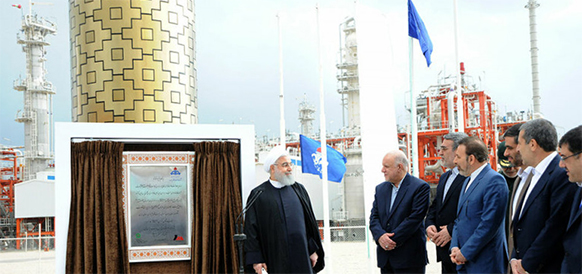
Goreh-Jusk oil pipeline project was the 3rd project inaugurated on June 25. The pipeline will transfer 1 million barrels of heavy and light crude oils per day to Jask oil terminal in the Hormozgan Province to be exported.
To read the article in Russian.