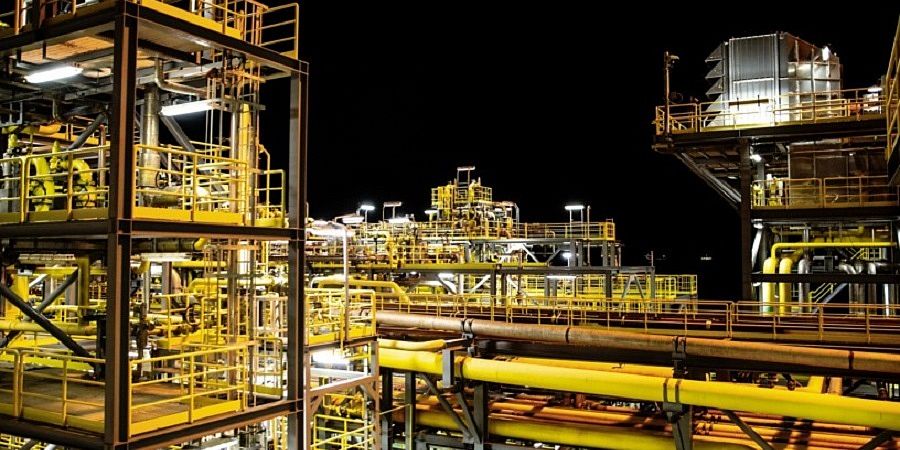
In temperatures that seldom fall under 100 degrees Fahrenheit (38 Celsius) during the day, workers from Indonesia, Bangladesh, India, the Philippines and other nations wear hoods against the sun as they finish the hundreds of kilometers (miles) of pipelines, three 600,000 barrel storage tanks, 15,000 horsepower pumps and a bomb proof control centre that make up the 10 billion dollar complex.
In a year's time, the Al-Khurais field will be supplying 1.2 million barrels a day of Arab light crude to thirsty global markets, under a tight schedule set by Saudi Aramco, the national oil giant.
Khurais is city-sized but can only be reached up a seemingly endless desert road, with truck tyres and carcases of burned out cars strewn along the sides and black camels roaming in the dunes.
Aramco took journalists this week to its latest "mega project", about 100 miles (160 kilometers) east of Riyadh, which will handle oil extracted from its Khurais, Abu Jifan and Mazalij fields.
The company calls it "the largest industrial project in the world."
Together the three fields have estimated reserves of 27 billion barrels and their joint daily production of 1.2 million barrels will be more than OPEC's three smallest members Indonesia, Qatar and Ecuador, according to Aramco.
Aramco vice president for production Amin Al-Nasser said 500,000 barrels a day will start coming out of its Khursaniyah field in August, and by the end of the year 250,000 barrels will be coming from the Shaybah field and 100,000 barrels a day from the Nuayyim field.