Though the Galoc could make up 9 percent to 10 percent of the country’s needs, Martinez said it still does not guarantee that prices of local petroleum products would go down.
With about 20 million barrels of estimated oil reserves, according to Martinez, the Galoc’s deposit is equivalent to the country’s two-month consumption.
At an estimated 22,000 barrels of oil production daily from the Galoc Fields off Palawan, Press Secretary Jesus Dureza on Sunday said the Philippines could become self-sufficient, over and above in its daily requirement of fossil fuel in 10 years’ time.
“With Galoc’s reserves of about 10 million to 20 million barrels of oil, the country’s dependence on imported oil will be over in a decade,” Dureza said, adding the government is not just banking entirely on Galoc as 32 other oil explorations are currently being undertaken with the help of private contractors, as of September 2008.
Based on the Department of Energy’s (DOE) records, Norasian Energy Ltd., which has an 18-percent indirect interest in the Galoc oil field, was awarded four service contracts (SC): SC 50, which covers 128,000 hectares in northwestern Palawan; SC 51 covering 332,000 hectares in Eastern Visayas, SC 55 covering 900,000 hectares in West Palawan and SC 69 covering 704,000 hectares in the Visayan Basin.
“We also have oil explorations in Cebu, Davao, Agusan, Cagayan and the Central Luzon Basin,” Dureza said.
Dureza also cited recent studies conducted by the DOE that the Philippines has a total of 456 million barrels of fuel oil. The volume consists of 54 million barrels of condensate, 2,135 billion cubic feet of gas and 25 million barrels of oil.
“The government hopes to hit the jackpot and find these untapped resources, just like what we did in Galoc,” Dureza said.
Martinez explained that pricing would depend on the contracts the consortium will get into. Martinez said the consortium could price the Galoc oil pegged on international oil prices.
Martinez added, however, that it would help in a sense that local oil firms can save on freight costs. “But it would definitely help the government in terms of additional revenues considering that the consortium would have to remit royalties to the government,” he added.
On Thursday the DOE said the country is nearing its goal of energy independence after the Galoc oil field off Palawan started production of oil on Thursday.
The DOE said the first well was opened at 10:45 a.m. and oil was onboard at 11:20 a.m.
“We embrace this significant development as this will help immensely in our pursuit to be energy self-sufficient. We are expecting to get 20,000 barrels a day in the first 90 days of commercial production,” Energy Secretary Angelo Reyes said in a statement.
He said the projected output will provide for 6 percent of the daily oil demand of the country. “We are on the right track in utilizing our indigenous sources,” he added.
In a time of uncertainty in oil prices, Reyes said Galoc’s first oil will benefit the Philippines by making the country less reliant on imported crude oil and save millions of dollars in importation cost.
Jeff Davison, Galoc Production Co. chief operating officer, said the development of any offshore field presents a unique set of challenges—particularly so for a small field in a remote location like Galoc. Davison said his company invested three years of committed and concerted efforts to bring the Galoc field into production.
“Achievement of this milestone is a credit to the Department of Energy, which has worked relentlessly to promote oil and gas activity in the Philippines, our joint-venture partners and our key contractors. It is a momentous day for us all,” said Davison.
Once production has stabilized following flow testing that will be undertaken over the coming weeks, production is expected to reach about 20,000 barrels of oil per day from the two wells with an average of about 17,000 barrels of oil per day over the remainder of 2008.
The reserves estimate in Galoc is approximately 10 million barrels, based on an assessment in 2006 for a two-well development. Assessment of the ultimate potential with a view to further development will be undertaken during the initial six months of production.
The Galoc Field was discovered in 1981 with further appraisal undertaken in 1988, but was not developed at that time owing to a combination of risks associated with the reservoir and low oil price.
Since then, advancements in technology have both improved the capability of defining the reservoir and reduced the number of wells needed to access the reserves—as successfully achieved with the recently drilled horizontal development wells Galoc-3 and Galoc-4.
DOE said present production is from the first well, with the second well due to come on-line shortly.
The current development was initiated in mid-2005 when Galoc Production Co. WLL (GPC) farmed in to the existing Service Contract SC14-C Galoc Sub-Block.
GPC is jointly owned by a subsidiary of Vitol Group and Otto Energy Ltd. It is working with joint-venture partners Nido Petroleum Pty Ltd, Oriental Petroleum and Minerals Corp., The Philodrill Corp., Forum Energy Philippines Corp., Alcorn Gold Resources Corp. and PetroEnergy Resources Corp. to rapidly appraise and bring the Galoc Field into production.
The Malampaya field provides the fuel to power three electrical plants in Batangas which produce a total capacity of 2,700 megawatts, saving the government billions of pesos earmarked for the purchase of natural gas.
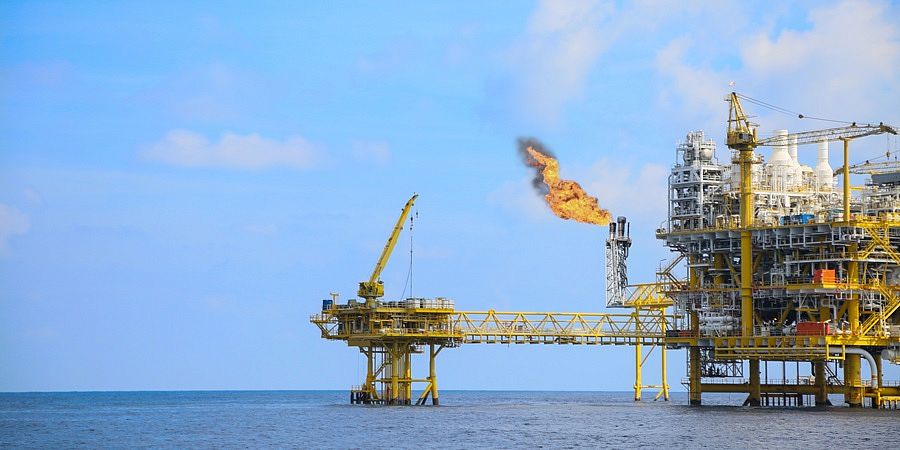
The Galoc Production Company (GPC) is located about 60 kilometers west of Culion Island in Palawan. This marked the first time that an oil field was developed since 1992, Dureza said.
At present, Galoc’s production volume will provide for six percent of daily oil demand of the country, which is pegged at 300,000 barrels.
“We expect Galoc oil development to bring the country’s energy independence to 60 percent in two years,” Dureza said.
Aside from this, Dureza said Galoc can also help strengthen the country’s dollar reserve as cost of fuel imports will dramatically decrease once the supply of oil from the newly discovered oil field becomes steady.
“The country’s dollar reserve will gain $1.4 billion annually if Galoc delivers its expected oil output within its first three months of operation,” Dureza said.
Also, Dureza said the oil field could help contain the increasing cost of food and other commodities.
Galoc’s output is expected to rise as further studies and exploration of the site could result in additional yields, Dureza added.
Author: Jo Amey