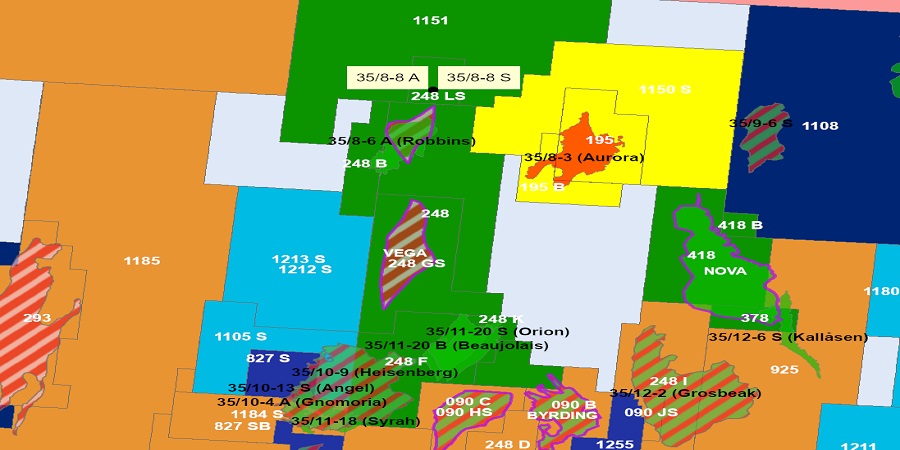
Wildcat wells 35/8-8 S and A were drilled in production licences 248 LS and 248 B, which are part of the Vega Unit in the North Sea, 100 kilometres southwest of Florø. Preliminary estimates indicate the size of the discovery is between 0.4 and 0.8 million standard cubic metres (Sm3) of recoverable oil equivalent. This corresponds to between 2.2 and 4.7 million barrels of oil equivalent.
35/8-8 S and A are the first and second exploration wells drilled in production licences 248 LS and 248 B. Production licence 248 B was awarded in 2006 (APA 2005), while 248 LS was awarded in 2025 (APA 2024) as additional acreage for production licence 248 B.
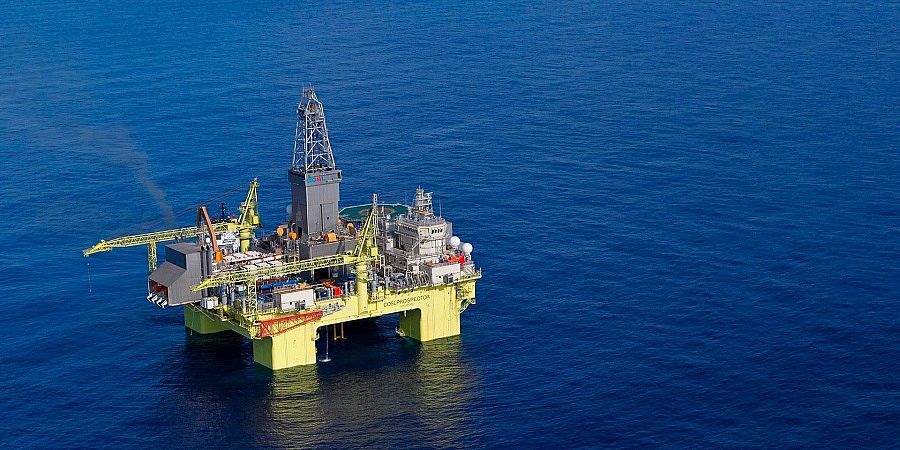
The licensees will consider tying the discovery back to existing infrastructure on the Vega field. The wells were drilled by the Transocean Norge rig.
Geological information
The primary target for well 35/8-8 S was to prove petroleum in reservoir rocks from the Middle Jurassic (Brent Group) and the Early Jurassic (Cook Formation).
Well 35/8-8 S encountered a 26-metre gas column in the Tarbert Formation in the Brent Group, in sandstone totalling 10 metres with poor reservoir properties. The gas/water contact was not encountered.
Two gas columns - 2 and 4 metres respectively - were also encountered in the Etive Formation (Brent Group), in sandstone totalling 6 metres with moderate reservoir properties. The gas/water contact was encountered 3752 metres below sea level in the upper gas column. The gas/water contact was not encountered in the lower gas column.
In the other primary exploration target, the well encountered reservoir rocks from the Early Jurassic (Cook Formation) with a thickness of 123 metres, in sandstone totalling 34 metres with moderate reservoir properties.
The well also encountered reservoir rocks from the Late Jurassic (Heather Formation) with a thickness of 238 metres. 39 metres of this consists of sandstone with poor reservoir properties. Furthermore, the well proved a 2-metre gas column in reservoir rocks from the Early Jurassic (Drake Formation) totalling 1 metre of sandstone with poor to moderate reservoir properties.
The well was drilled to a vertical depth of 4146 metres below sea level in the Amundsen Formation.
The primary target for well 35/8-8 A was to prove petroleum in reservoir rocks from the Middle Jurassic (Brent Group).
Wildcat well 35/8-8 A encountered reservoir rocks from the Middle Jurassic (Brent Group) with a thickness of 139 metres. 53 metres of this was in sandstone with good to poor reservoir properties. The well encountered a 2-metre gas column in the Ness Formation (Brent Group), in sandstone totalling 2 metres with moderate reservoir properties. The gas/water contact was encountered at 3654 metres below sea level.
The well also encountered reservoir rocks from the Late Jurassic (Heather Formation) with a thickness of 214 metres. 36 metres of this consists of sandstone with poor reservoir properties.
The well was drilled to a vertical depth of 3789 metres below sea level in the Rannoch Formation.
Neither well was formation-tested, but extensive data acquisition and sampling were carried out. Water depth at the site is 375 metres, and wildcat wells 35/8-8 S and A have been permanently plugged and abandoned.