The process of delivering goods from storage cell to pick-up window happens on a completely standalone (offline) basis. Warehouse employees’ safety is ensured by all automated machinery being fitted with sensors which, in the event of a person appearing in such sensor’s line of vision, immediately stop any movement by the platform.
The Russian-manufactured 1.5-tonne-payload Ronavi H1500 was used for the 1st time in testing particularly heavy freight: one of this AMR’s advantages also being its high-capacity battery, allowing it to operate for up to eight hours without recharging.
Based on the outcomes of tests on these new model robots, Gazprom Neft plans to create a single and cohesive IT platform for managing all robotics solutions within its digital logistics facility.
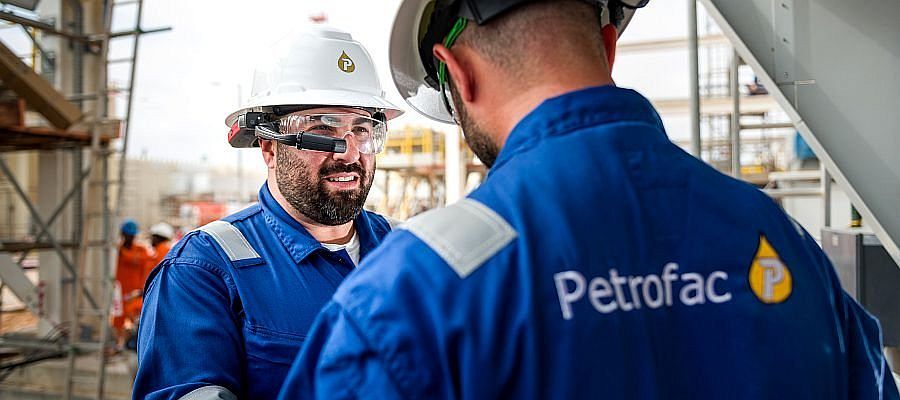
The digital logistics facility includes an automated warehouse outlet, a vertical lift storage system, automated pallet transport, and other robotised technologies. For employees’ convenience, the facility’s navigation system also uses augmented-reality (AR) technologies, meaning data on the location of required products can be instantly obtained through glasses fitted with an AR headset.